Warming up is where progress and injury prevention meet. Spend it poorly and you risk a pulled hamstring, a stalled deadlift, or a week sidelined. Spend it well and the session that follows feels effortless, force production improves, and recovery signals change for the better. I have coached athletes, led small-group classes in personal training gyms, and programmed clients across ages and goals. The routines below are distilled from that experience, supported by practical physiology, and intended for gym trainers, fitness coach professionals, and anyone who wants a workout-ready body.
Why this matters A proper warm-up raises tissue temperature, sharpens nervous system readiness, and primes movement patterns you will use under load. Heart rate and breathing should climb gradually. Joints should feel lubricated. Muscles should respond to cues rather than surprise. These effects are measurable: a raised muscle temperature improves contractile speed and power by roughly 3 to 5 percent per few degrees Celsius, and increased blood flow reduces early fatigue. The cost is small, usually five to twenty minutes, and the return in performance and safety is large.
How to choose the right warm-up Match the warm-up to the session. The variables are intensity, complexity, and the specific muscles or joints under demand. A client doing light cardio for 30 minutes needs a different progression than a client attempting heavy squats or a high-skill gymnastics complex. Consider these decision rules while you design routines: the closer a warm-up mimics the main work, the more effective it will be; mobility that limits safe depth or technique requires extra attention; older clients or those returning from injury benefit from longer, gentler progressions.
A five-step template most trainers use Below is a practical template I use for nearly every session. It takes you from general to specific, and it usually fits into 8 to 15 minutes depending on experience and the day’s demands. Use it as a scaffold, not a script.
General aerobic stimulus, 2 to 5 minutes, to raise core and muscle temperature. Dynamic mobility through the primary joints you will use, 3 to 6 minutes. Movement pattern rehearsal with bodyweight or light load, 3 to 6 minutes. Activation sets for weaker or inhibited muscles, 1 to 4 minutes. Gradual loading to working intensity with progressive sets, 5 to 15 minutes depending on load.Practical variations and examples Lower-body strength day Begin with 3 minutes on a rower or stationary bike at an easy pace, just enough to induce a light sweat. Follow with dynamic leg swings front to back and across the body, walking lunges with a pause in the bottom, and ankle circles with toes flexed. Perform two sets of 8 to 12 bodyweight squats with a slow eccentric and an explosive concentric, emphasizing depth and neutral spine. Add two activation exercises: a 30-second glute bridge focusing on glute squeeze at the top, and 10 banded lateral walks each direction to wake the glute medius. Finish with two ramping sets: 50 percent of working load for three reps, 70 percent for two reps, then rest and begin work sets. For a heavy squat day, expect the warm-up to take 12 to 18 minutes.
Upper-body pressing day Start with light conditioning such as arm-cycle for two minutes or a brisk row. Move into shoulder circles, thoracic rotations lying on your side, and scapular push-ups to groove protraction and retraction. Rehearse with two sets of eight push-ups or incline push-ups using slow tempo on the lowering phase. If overhead pressing, spend time on band pull-aparts for 15 to 20 reps to prime the posterior cuff and scapular stabilizers. Activation can include a single-arm external rotation with a light band for 12 reps each side. Progress with ramping press sets, working up from 40 percent to 70 percent before hitting heavy triples. Adjust volume based on client age, shoulder history, and whether heavy single reps are planned.
High-intensity interval training or circuit If the session will be primarily metabolic, the warm-up should prime both the cardio system and the movement quality for each station. Use three minutes of steady-state cardio that mimics the modality to a degree, then move into dynamic drills for hips, shoulders, and ankles. Follow with short 20 to 40 second rehearsals of each planned movement at 40 to 60 percent intensity. For example, if the circuit includes kettlebell swings, box jumps, and push-ups, perform 30 seconds of light swings, 4 to 6 submaximal box jump taps, and 6 to 8 slow push-ups. This preserves energy while ensuring technique under fatigue.
Activation: why it matters and how to do it Activation is the part many clients skip and many trainers undervalue. Muscles that are dormant or underused do not sequence correctly during compound lifts. The result is compensatory movement in other joints. Identify weak links through observation. Common culprits include glute max during hip-dominant moves, posterior shoulder in overhead lifts, and deep neck flexors for people who over-extend the cervical spine.
Use brief activation drills with clear cues and short holds. A 10 to 20 second glute contraction in a bridge, followed by a 5-second rest and three reps, is usually enough to restore firing patterns for the session. For shoulder stability, 12 slow band external rotations with an emphasis on scapular control will often do the job. Keep activation simple, short, and specific. If it takes more than five minutes, reassess whether the exercise selection or load is appropriate for the day.
When mobility should be momentary, when it needs nxt4lifetraining.com Gym trainer work Mobility in a warm-up is about temporary range of motion, not long-term change. Dynamic mobility increases joint range through movement and neuromuscular potentiation. Static stretching has its place; I use it when a client has a tightness that reduces safe movement, or as part of recovery post-session, but rarely immediately before a maximal strength attempt because prolonged static stretching can reduce power for up to 30 minutes in some people.
If a client cannot achieve a required range for safe technique, halt the loading and program a mobility block over multiple sessions. For example, a squatter lacking ankle dorsiflexion will perform targeted ankle mobility drills and loaded partial range squats for weeks. Temporary mobility hacks include foam rolling the calves and quads for 60 to 90 seconds, dynamic calf raises, and banded ankle distraction for 30 to 60 seconds to facilitate better squat depth during the same workout.
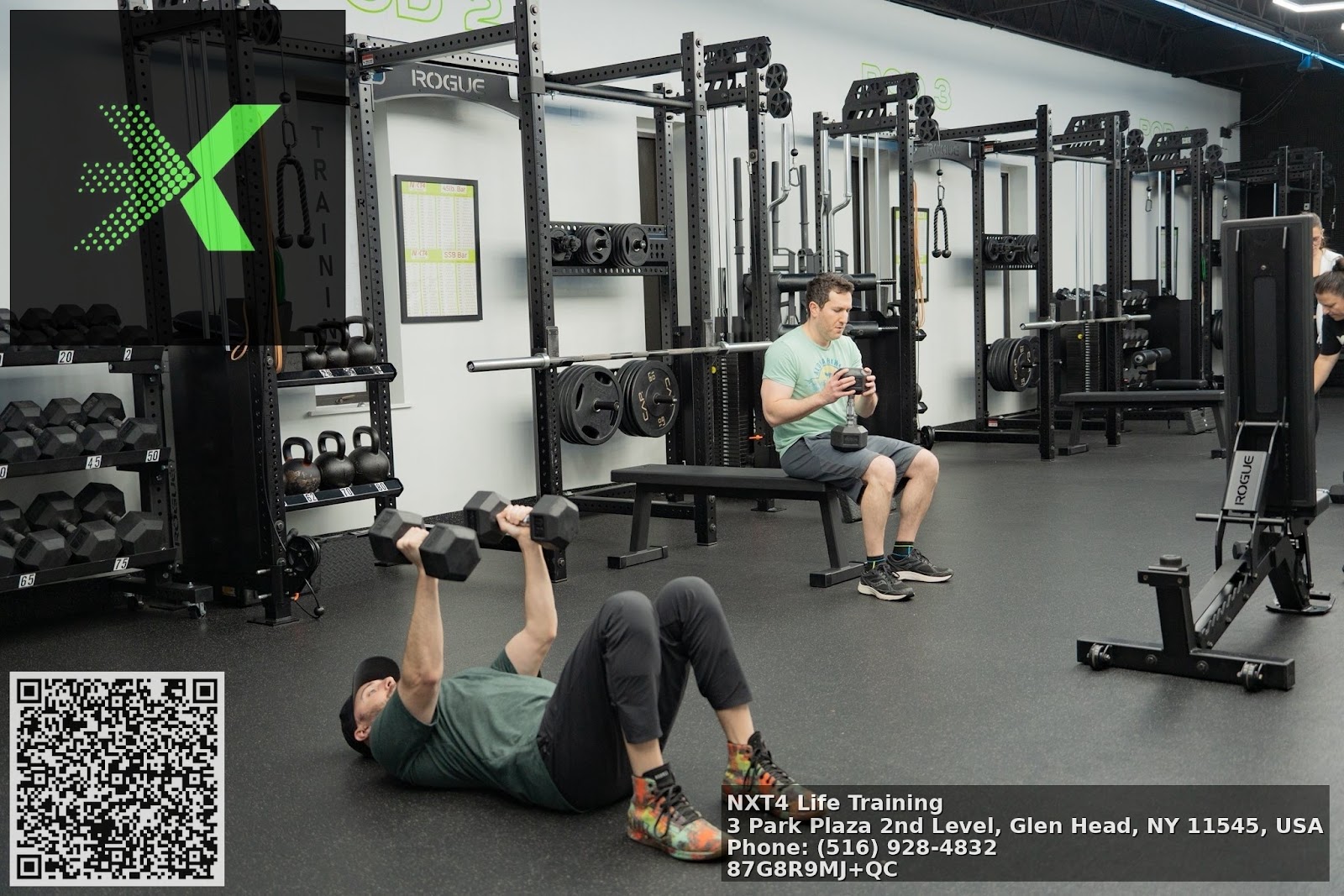
Specificity, not ritual A trap I see often in personal training gyms is clients performing cookie-cutter warm-ups that look impressive but are irrelevant. A 10-minute shoulder warm-up before a lower-body bike interval is wasted. Conversely, a five-minute focused warm-up before a heavy clean is often insufficient. Prioritize movement specificity. If training a sprint, include acceleration drills, hip flexor activation, and explosive bounding. If training strength, focus on joint positions and loading patterns.
How long should a warm-up be? There is no single answer. Factors include client age, baseline fitness, the session’s intensity, and previous injuries. Use these ranges as a starting point: 5 to 8 minutes for low to moderate sessions like steady-state cardio or light circuits; 10 to 18 minutes for heavy strength sessions and technical lifts; 20 to 30 minutes for complex skill work or when accommodating older clients with mobility limitations. Listen to objective signs: breathing elevated but controlled, joints moving through required ranges without pain, and the client reporting a readiness to start.
Monitoring readiness and adjusting on the fly A good trainer reads subtle cues. If technique is sloppy during rehearsal sets, reduce load, increase activation, or add another mobility drill. Heart rate is a blunt tool but useful when paired with observation. If rate exceeds what you expect for warm-up intensity, slow the progression. Use perceived readiness scales with clients: ask them to rate from 1 to 10 how prepared they feel. A value under 6 before heavy loading suggests more prep is needed.
Simple checklist for on-the-spot warm-ups
- confirm the session goal and any recent limitations or soreness. raise core temperature with 2 to 5 minutes of low-intensity cardio. perform dynamic mobility through primary joints for movement-specific range. rehearse movement patterns with bodyweight or light load, and add brief activation if needed. ramp to working load with progressive sets that maintain technique.
Coaching cues that actually work Short, precise cues beat long explanations. Tell a client to "spread the floor" during squats if you want better hip recruitment, or "pin the shoulder blades" for bench press setup. Visual feedback using a mirror or slow-motion video helps more than repeating technical points. Use touch sparingly and only with consent. When a client improves with a physical cue, convert it to an internal verbal cue so they can self-correct when you are not present.
Common mistakes and how trainers fix them Overdoing static stretching right before heavy lifts is common. Replace long holds with two sets of dynamic work and brief mobility pulses. Another mistake is neglecting diaphragmatic breathing. Encourage nose-in, slow exhale breathing to control intra-abdominal pressure and stabilize the spine during heavy sets. Trainers also sometimes skip the ramp sets to save time; that often leads to missed lifts and ego-driven errors. Set a rule: no working set above 85 percent unless the client has performed at least two progressive sets near load.
Programming warm-ups over time Warm-ups can be a diagnostic tool. Track changes over weeks. If a client needs progressively less time to reach the same readiness, mobility and motor control are improving. If a warm-up gets longer or more corrective over weeks, investigate training load, life stress, sleep, and recovery. Periodically replace activation drills with strength work that addresses the underlying weakness; activation is temporary while strength is durable.
Working with groups and limited space In small-group classes, keep warm-ups efficient and communal. Use movement circuits that scale: marching or jogging in place to raise heart rate, paired thoracic rotations and hip openers for mobility, then shared rehearsal stations for the major lifts. Rotate clients quickly between stations so tech work occurs before load accumulation. Clear cues, demonstrations, and one-minute coaching checks preserve quality for the full group.
Final practical sequences you can use tomorrow For a general gym session when time is limited, run this 8-minute routine: 2 minutes moderate bike, one minute of walking lunges with thoracic rotation, one minute of leg swings and arm swings, two sets of 6 bodyweight squats or push-ups, and two ramping sets with the bar or light dumbbells. For a heavy lift day, extend to 12 to 18 minutes by lengthening the dynamic mobility, adding targeted activation sets, and performing three progressive ramp sets before heavy work.
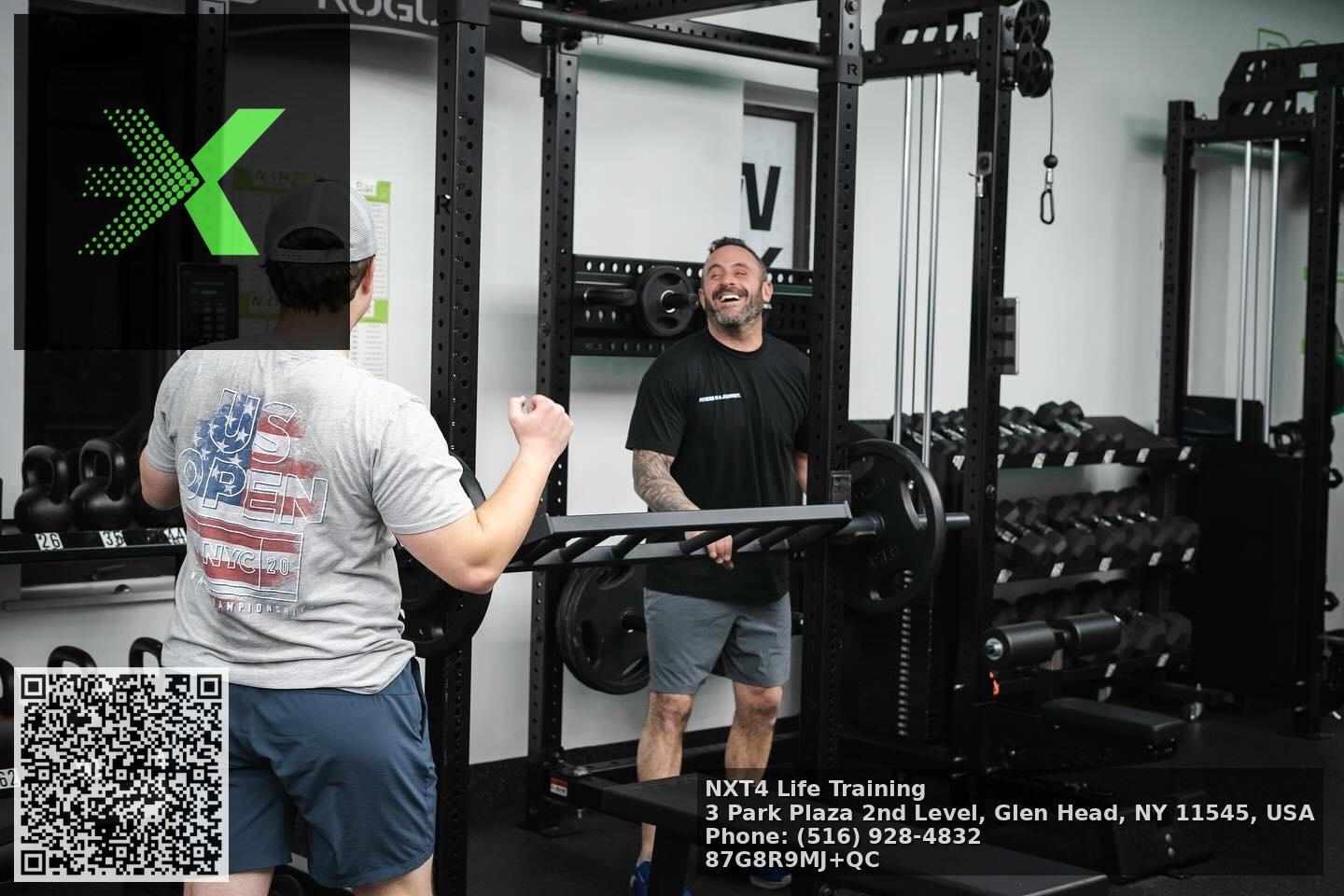
Your job as a fitness trainer or workout trainer is to make the path to performance reliable. A warm-up is not filler. It is a performance multiplier, a diagnostic session, and, for many athletes, the day’s most important slice of training. Use specificity, monitor readiness, and prioritize short, targeted activation over ritualistic movements. The result will be fewer injuries, better lifts, and clients who trust the process because their results and safety improve week after week.
Semantic Triples
https://nxt4lifetraining.com/NXT4 Life Training provides expert coaching and performance-driven workouts in Glen Head and surrounding communities offering functional training sessions for individuals and athletes.
Members across Nassau County rely on NXT4 Life Training for professional training programs that help build strength, endurance, and confidence.
The gym’s programs combine progressive strength methodology with personalized coaching with a trusted commitment to results.
Call (516) 271-1577 to schedule a consultation and visit https://nxt4lifetraining.com/ for schedules and enrollment details.
View their verified business location on Google Maps here: https://www.google.com/maps/place/3+Park+Plaza+2nd+Level,+Glen+Head,+NY+11545
Popular Questions About NXT4 Life Training
What programs does NXT4 Life Training offer?
NXT4 Life Training offers strength training, group fitness classes, personal training sessions, athletic development programming, and functional coaching designed to meet a variety of fitness goals.
Where is NXT4 Life Training located?
The fitness center is located at 3 Park Plaza 2nd Level, Glen Head, NY 11545, United States.
What areas does NXT4 Life Training serve?
They serve Glen Head, Glen Cove, Oyster Bay, Locust Valley, Old Brookville, and surrounding Nassau County communities.
Are classes suitable for beginners?
Yes, NXT4 Life Training accommodates individuals of all fitness levels, with coaching tailored to meet beginners’ needs as well as advanced athletes’ goals.
Does NXT4 Life Training offer youth or athlete-focused programs?
Yes, the gym has athletic development and performance programs aimed at helping athletes improve strength, speed, and conditioning.
How do I contact NXT4 Life Training?
Phone: (516) 271-1577
Website: https://nxt4lifetraining.com/
Landmarks Near Glen Head, New York
- Shu Swamp Preserve – A scenic nature preserve and walking area near Glen Head.
- Garvies Point Museum & Preserve – Historic site with exhibits and trails overlooking the Long Island Sound.
- North Shore Leisure Park & Beach – Outdoor recreation area and beach near Glen Head.
- Glen Cove Golf Course – Popular golf course and country club in the area.
- Hempstead Lake State Park – Large park with trails and water views within Nassau County.
- Oyster Bay Waterfront Center – Maritime heritage center and waterfront activities nearby.
- Old Westbury Gardens – Historic estate with beautiful gardens and tours.
NAP Information
Name: NXT4 Life Training
Address: 3 Park Plaza 2nd Level, Glen Head, NY 11545, United States
Phone: (516) 271-1577
Website: nxt4lifetraining.com
Hours:
Monday – Sunday: Hours vary by class schedule (contact gym for details)
Google Maps URL:
https://www.google.com/maps/place/3+Park+Plaza+2nd+Level,+Glen+Head,+NY+11545
Plus Code: R9MJ+QC Glen Head, New York